(Aka the best week yet!)
With a 6000 year history, the story of Sicily can be traced back to wheat. It was the breadbasket of the Roman Empire and is still important today. It ties people to the land, is one of the crops well suited to the weak soils, slopes, and difficult climate of the island, and is the starting point for the food we think of in Italy- bread and pasta.
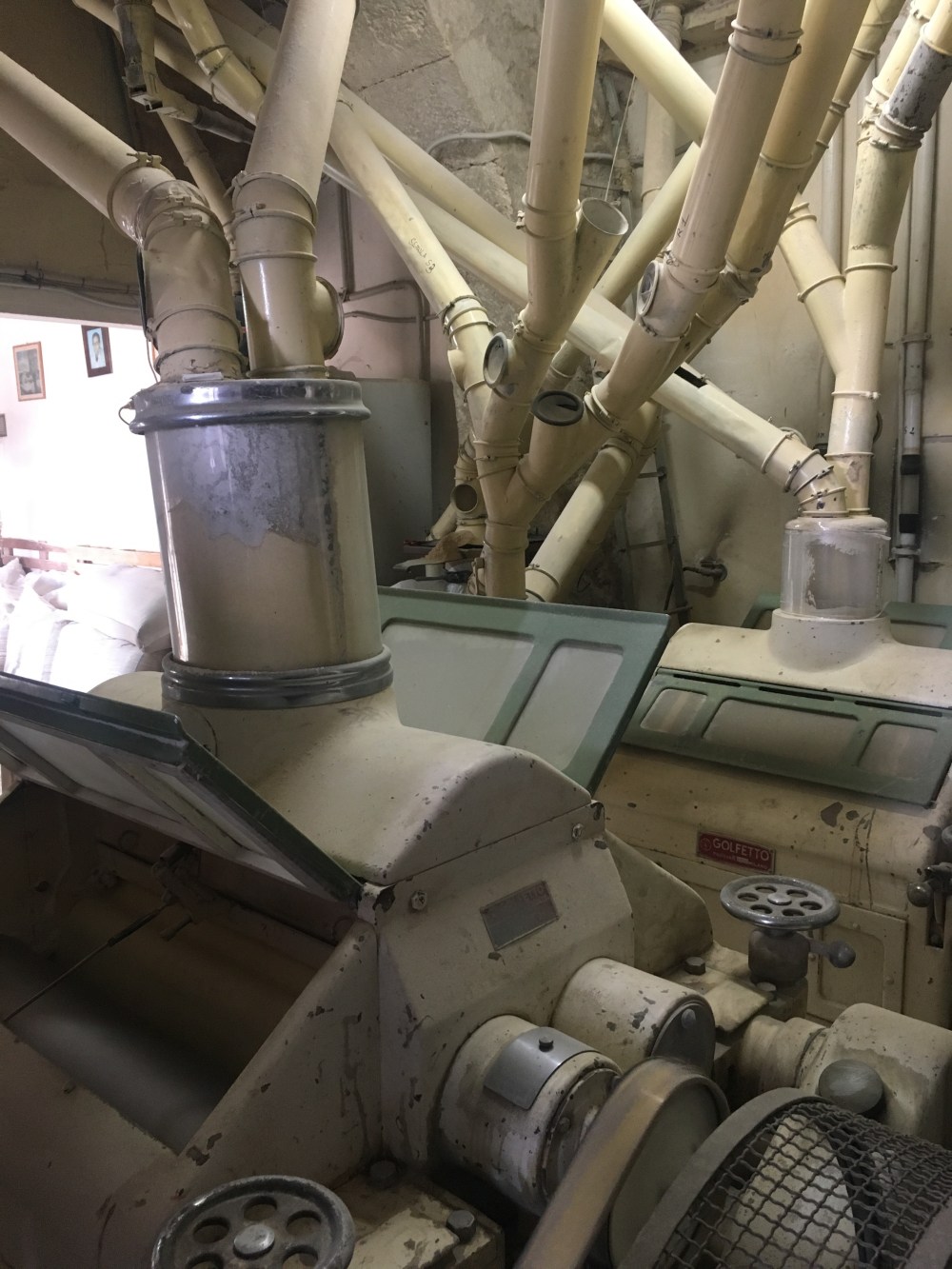
We visited a flour mill in Mussumeli run by two young brothers. They mill only the local durum wheat and sell it to local bakeries, pizzerias, and directly to customers. It was incredible to see the whole process of cleaning and passing up and down eight different times to get different grinds from a rough husk (good for livestock) down to a fine semolina.
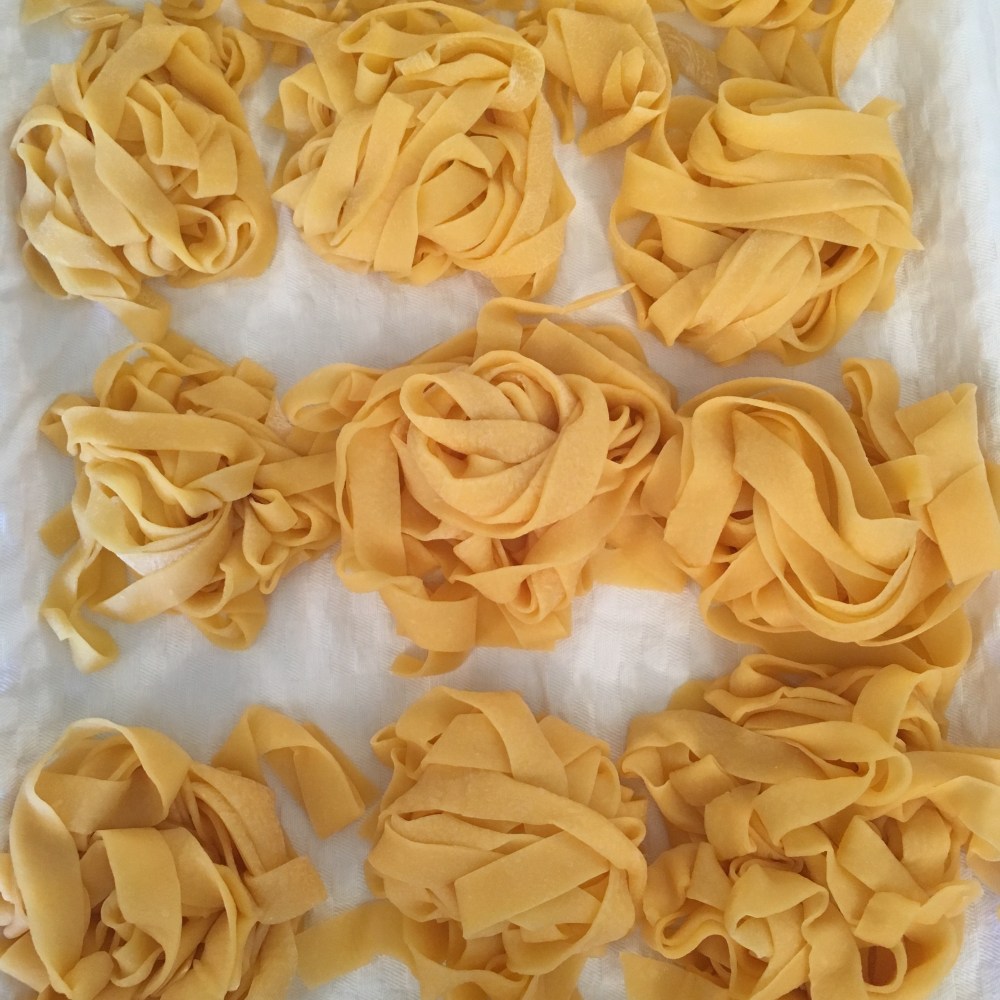
Then on to making pasta! We learned the northern style from master Rina Poletti- who artfully rolls the egg laden dough with a meter long rolling pin and expertly taught us how to make tartelli, farfalle, tortellini, and the most amazing lasagna bolognese. Enza, one of the women who works at Casa Vecchie and cooks lunch for us, taught us southern pasta made with just local hard wheat and water. Cavatelli, busiate, and the oh so tricky to roll ziti were fun to make and delicious with the canned tomato sauce from the garden or a simple sage and butter dressing.
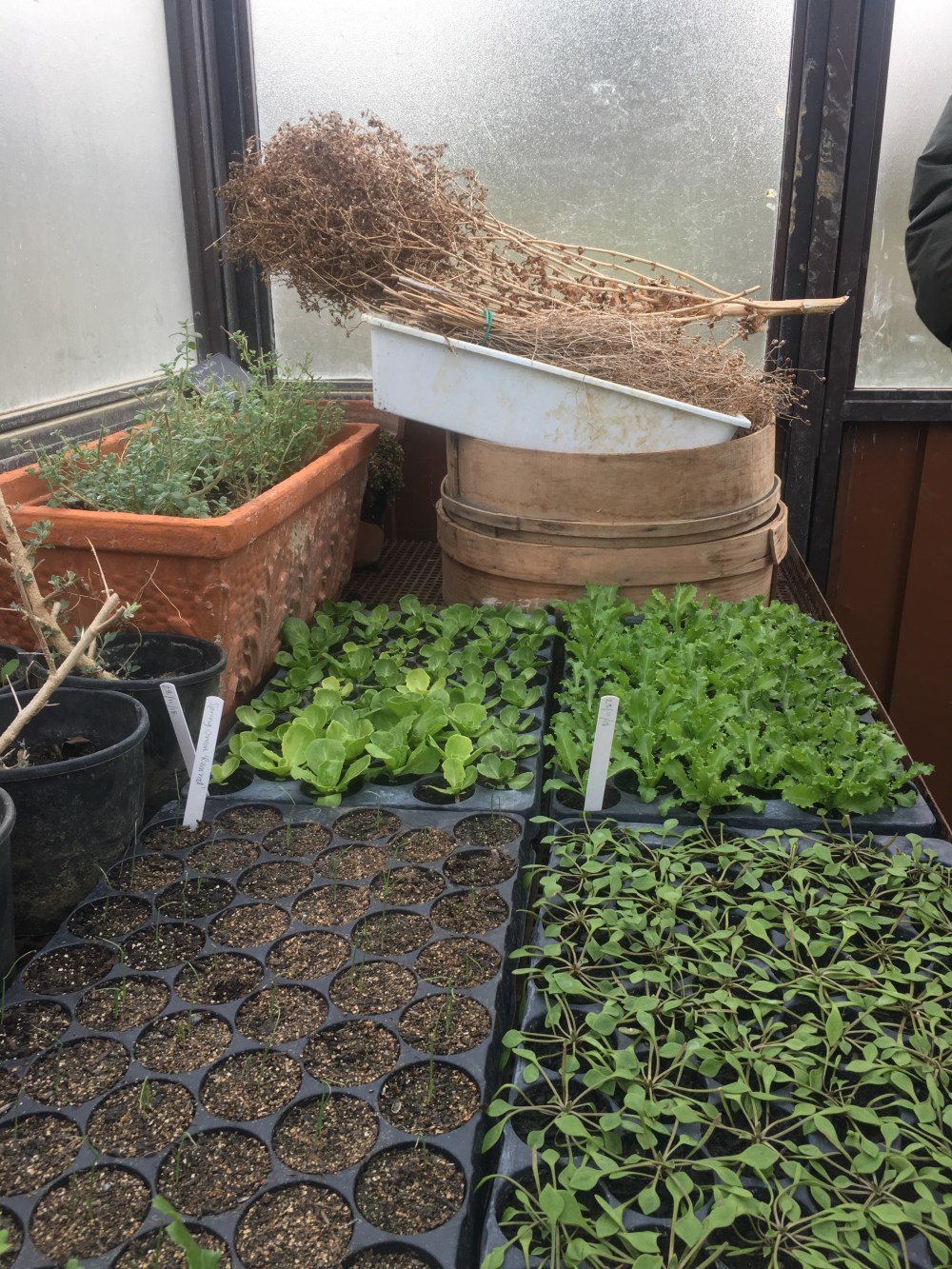
The week in the kitchen was bookended by time in the garden and lectures. We preformed soil tests and seeded flats in the greenhouse to plant out in the garden in a few weeks. Visiting professors of Agroecology and Agronomy gave us insight into the agricultural development in Sicily and Italy and where the organic movement comes in. Despite being the home of Slow Food, typical Italians don’t eat like that, then it was not a surprise yet interesting to learn that 70% of food is imported despite the fact that 25% of the biodiversity of all of Europe is in Sicily. Only 10% of Sicilian farmers are under 40 and they have no extension or other training programs or really a plan for the future. Despite these dire statistics, both our guests were optimistic about the future of Italian agriculture and its regenerative growth.
 Field Guide to Delicious